
Same shape this week: what matters on the network, one city handled properly, one crew move, one thing for the bag, one scam to avoid. Four minutes.
Open the Shanghai Guide - Free Preview this week
From the catalog
Shanghai is the featured city this week. The guide is built for the mainland China layover that looks polished but still needs preparation: PVG routing, Airport Link Line judgment, Alipay and WeChat Pay setup, VPN and map prep, xiaolongbao, shengjianbao, Bund lights, French Concession lanes, Yu Garden timing, shopping value, halal fallbacks, and the scams that still catch people who think Shanghai will work like Hong Kong. Shanghai is the Free Preview for this issue window. See the catalog
Next on the drafting desk: Beijing. The issue should be built around airport distance, payments, translation, hutong lane judgment, Peking duck decisions, Great Wall timing, and the difference between a good Beijing layover and a long day spent fighting the wrong app.
On the network this week
Shanghai airport rail. The Shanghai Airport Link Line connects Hongqiao Airport Terminal 2 and Pudong Airport T1/T2 in about 40 minutes. The official guide lists a CNY 4 starting fare, CNY 26 for the full journey, and trains every 15 minutes. Useful if you need airport-to-airport movement. It is not a magic shortcut for every central-city plan.
China transit rules. China's National Immigration Administration updated its transit visa-free policy on August 20, 2026. The big headline is the 240-hour visa-free transit policy for eligible passports, with confirmed onward travel to a third country or region. Good news, but do not guess at immigration. Check your passport, route, ticket, and entry conditions before you build the layover around it.
Payments in China. The official Payment options in China guide is still the crew prep note: Alipay, Weixin Pay/WeChat Pay, bank cards, and cash all exist, but mobile payment is the normal layer. Download, bind, and test before landing. A dumpling counter is not the place to discover that your card issuer blocked the app.
Shanghai after dark. The 2026 Shanghai major events guide puts September into the autumn event season, with the Shanghai International Light Festival, WorldSkills, design events, esports, and district festivals on the calendar. For a short PVG layover, treat that as background texture. Pick a route first. Let the event be a bonus, not the whole plan.
Huangpu nights. Huangpu district is running nearly 60 nighttime events through late September, including shopping, dining, sightseeing, performances, reading, and sport. This matters because Huangpu covers the old-city, Bund, Xintiandi, and central-river zones many crew already pass through. Go if it fits the route. Do not cross Shanghai for a maybe.
City deep-dive: Shanghai works if your phone works
Shanghai is not hard because it is rough.
It is hard because it looks easy.
The skyline is clean. The roads are smooth. The malls are polished. The coffee is good. Then the payment screen says no, the map name does not match, WhatsApp refuses to load, and the group is standing outside a restaurant trying to translate the next move.
That is the Shanghai lesson: prepare the phone before you trust the city.
Start before landing.
Install and test a VPN. A VPN is the app that helps you reach blocked services such as Google, WhatsApp, Instagram, Gmail, and some Western sites. Set up Alipay and WeChat Pay. Save Chinese names for the hotel area, airport, and any restaurant you care about. Keep offline translation ready. If you wait until arrival, you are asking a tired brain to solve a technical problem in a foreign city.
Then confirm the airport.
Shanghai has Pudong, usually written as PVG, and Hongqiao, written as SHA. They are not close. Emirates normally uses PVG, but do not build a plan from habit. Check the actual airport on the roster and the ticket. The Airport Link Line is useful between airports. Metro Line 2, the Maglev to Longyang Road, and Didi all have their place. The right answer depends on where you are sleeping, how awake you are, and how much bag you are carrying.
Once the setup is done, Shanghai becomes a proper layover.
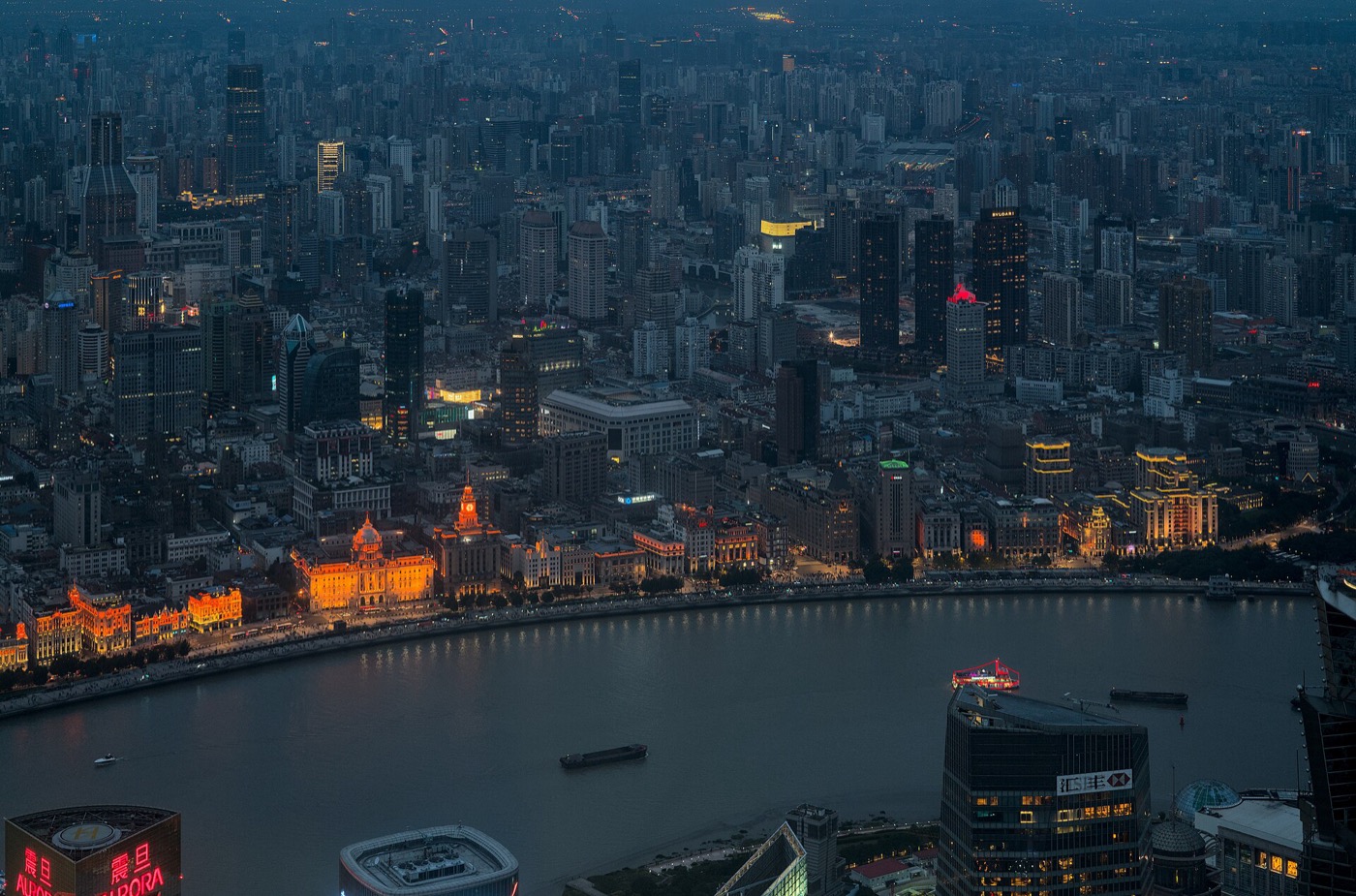
The clean first route is Bund plus French Concession. The Bund is the riverfront skyline walk. Do it at blue hour or after dark. Let it be dramatic. Then move into the plane-tree streets of the Former French Concession for food, coffee, small shops, and a softer pace. That pairing gives you the postcard and the city behind it.
Food should be simple and local.
Xiaolongbao are soup dumplings. They hold hot broth inside the wrapper, so bite, sip, then eat. Shengjianbao are pan-fried soup buns with a crisp bottom and hot broth inside. They are faster, messier, and often better for a short layover. Scallion-oil noodles are the quiet comfort order. Qingzhen means halal; Lanzhou beef-noodle shops are the everyday fallback when strict sourcing matters.
That is enough for a good day.
You do not need to turn Shanghai into a checklist. Yu Garden works best early. Nanjing Road works with a target and gets tiring without one. M50 is good if you want industrial art texture, but it is not the first stop on a short clock. A rooftop drink can be worth it, but only if the venue, price, and return are already clear.
Shopping has a strong verdict.
Shanghai is good for design goods, stationery, tea, snacks, books, polished local retail, and small beautiful things. Dubai wins on gold, electronics, perfume, luxury basics, and anything that needs warranty sanity. Buy the thing that can survive the suitcase and the receipt problem.
The safety brief is not dramatic, which is why it works.
Shanghai is generally safe with normal big-city discipline. The classic risks are smaller: tea-house approaches, fake goods, overfriendly stranger invitations, and payment or taxi confusion when you are tired. Walk past the friendly invitation that arrives too neatly. Use official ride apps where you can. Keep the phone close in crowds. Do not buy the fake bag and then act surprised when the fake bag behaves like one.
The full Shanghai guide carries the rest: PVG and SHA routing, Airport Link Line judgment, Maglev and Metro choices, phone setup, China payments, VPN reality, Bund and French Concession routes, Yu Garden timing, food terms, halal fallbacks, shopping value, rain recovery, creator spots, and what to skip on a short layover. Read the Shanghai guide - the Free Preview this week.
If Shanghai is on your roster, use the full guide before departure. It can save you from one payment failure, one wrong-airport assumption, one broken map search, one tourist-trap tea approach, or one polished mall afternoon that should have been dumplings, river light, and a clean return. The paid catalog is USD 8.99 a month (about AED 33), or, for the first 500 founders, USD 69.99 a year (about AED 257), locked for life. The point is not more information. The point is a layover that works. See the catalog
Crew move
Finish the China phone setup before pushback. VPN installed. Alipay or WeChat Pay tested. Translation ready. Chinese names saved. Offline map backup in place. If those four things work, Shanghai gets much easier.
The crew bag
Power bank, compact umbrella, and a universal Type A/I adapter. The power bank matters most. In Shanghai, the phone is payment, map, translation, ride app, camera, and group chat. A dead phone turns a polished layover into a very slow problem.
Safety brief
Walk past the friendly invitation that comes too fast. Tea-house scams and fake-goods pitches still exist because they do not need drama. They need a tired visitor who wants the city to be easy.
Keep your phone close on the Bund, Nanjing Road, Metro transfers, and busy market streets. Use official payment and ride tools where possible. If a price, route, or invitation feels unclear, slow down before money moves. Shanghai is a good layover. It just does not reward bluffing.
Tuesday next week: Beijing - airport distance, hutong lanes, duck decisions, Great Wall timing, payment prep, and how to make the capital work on a crew clock.
Trevor (Mr. Admin)